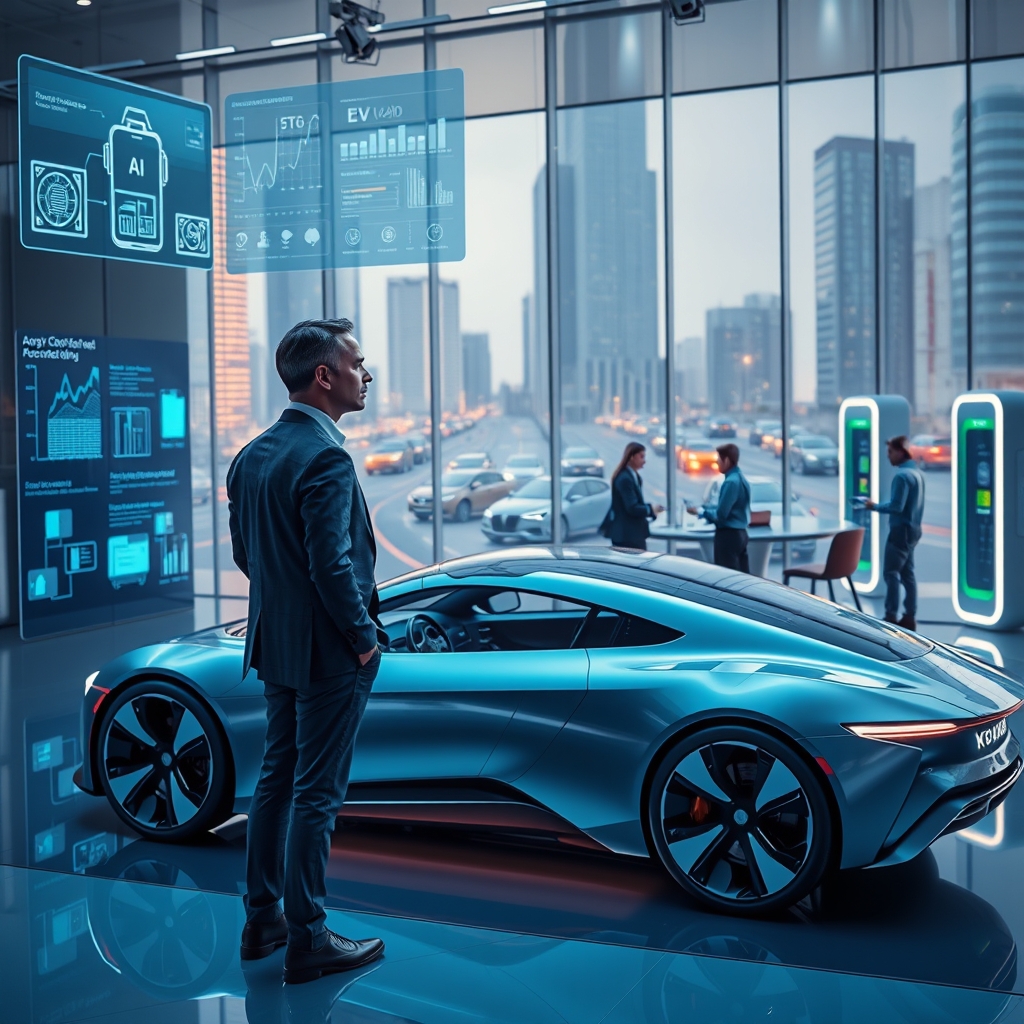
The Auto Mogul’s Guide to 2026: Navigating Disruption, Capitalizing on Innovation, and Leading the Mobility Revolution
By 2026, the term auto mogul no longer describes just a manufacturer or dealership owner—it defines a visionary shaping the future of mobility. Whether you’re scaling an EV startup, integrating autonomous fleets, or leveraging software-defined vehicles, this guide reveals how to build influence, anticipate industry shifts, and capitalize on emerging opportunities. You’ll learn how to align with regulatory trends, harness AI-driven insights, and forge strategic partnerships that redefine leadership in a fragmented, tech-driven market.
Key Takeaways
- Regulatory agility and compliance with 2026 emissions standards will separate leaders from laggards.
- AI and data analytics are now table stakes for predicting consumer demand and optimizing supply chains.
- Partnerships with tech firms, energy providers, and urban planners are critical to scaling mobility solutions.
- Software-defined vehicles (SDVs) and over-the-air (OTA) updates are reshaping revenue models beyond traditional sales.
What Does It Mean to Be an Auto Mogul in 2026?
The role of an auto mogul has evolved beyond manufacturing and sales. Today, it encompasses ecosystem leadership—orchestrating partnerships, influencing policy, and driving innovation across electrification, autonomy, and connectivity. The most successful leaders in 2026 are those who treat vehicles as platforms, not just products, and mobility as a service, not just a transaction.
For example, Tesla’s shift from hardware to software monetization demonstrates how auto moguls can pivot from one-time sales to recurring revenue streams. Similarly, traditional OEMs like Ford and GM are investing billions in battery technology and charging infrastructure, recognizing that energy integration is now part of their core business. The ability to anticipate these shifts—and act decisively—defines modern automotive leadership.
How Can You Align with 2026’s Regulatory and Consumer Trends?
Regulatory compliance is no longer a checkbox exercise; it’s a competitive advantage. By 2026, the EPA’s stringent emissions standards and the EU’s ban on new internal combustion engine (ICE) vehicles will reshape the market. Auto moguls who proactively adapt to these changes—whether through EV production, carbon-neutral manufacturing, or circular economy practices—will gain early-mover benefits.
Consumer behavior is equally transformative. A 2025 McKinsey report found that 68% of Gen Z and millennial buyers prioritize sustainability and digital integration when purchasing vehicles. This shift demands that auto moguls rethink marketing, customer engagement, and even dealership models. Subscription services, for instance, are gaining traction as younger buyers favor flexibility over ownership. Leaders who fail to address these preferences risk losing relevance in a rapidly evolving market.
Key Regulatory and Consumer Trends to Watch
- Emissions and ICE Bans: The EU’s 2035 ICE ban and similar policies in California and China are accelerating the transition to EVs. Auto moguls must invest in battery R&D, charging infrastructure, and recycling programs to stay compliant and competitive.
- Data Privacy and Cybersecurity: With software-defined vehicles collecting terabytes of data, compliance with GDPR and other privacy laws is non-negotiable. Leaders must prioritize cybersecurity to protect consumer trust and avoid costly breaches.
- Urban Mobility and Micromobility: Cities are increasingly restricting car access in favor of public transit, bikes, and scooters. Auto moguls who partner with urban planners to integrate mobility-as-a-service (MaaS) solutions will capture new revenue streams.
Why Are Strategic Partnerships the New Currency of Influence?
No single company can dominate the 2026 mobility landscape alone. The most influential auto moguls are those who forge alliances with tech giants, energy providers, and even competitors. These partnerships enable access to critical resources—whether it’s NVIDIA’s AI chips for autonomous driving, QuantumScape’s solid-state batteries, or Google’s mapping data for navigation.
Consider the collaboration between Volkswagen and Microsoft to develop the Automotive Cloud, a platform that integrates vehicle data with cloud services. This partnership allows VW to compete with Tesla’s software ecosystem while leveraging Microsoft’s expertise in AI and scalability. Similarly, Ford’s investment in Rivian highlights how traditional OEMs are hedging their bets by backing EV startups with disruptive potential.
How to Identify and Nurture High-Impact Partnerships
- Tech Integration: Partner with AI and cloud providers to enhance vehicle connectivity, predictive maintenance, and OTA updates. These collaborations can reduce development costs and accelerate time-to-market.
- Energy and Infrastructure: Work with charging network operators (e.g., ChargePoint, EVgo) and renewable energy providers to ensure seamless EV adoption. Energy storage and grid integration are emerging as lucrative opportunities.
- Mobility-as-a-Service (MaaS): Align with ride-hailing platforms (Uber, Lyft) and public transit agencies to create integrated mobility solutions. These partnerships can unlock new customer segments and revenue models.
How Can AI and Data Analytics Future-Proof Your Strategy?
In 2026, data is the new oil, and AI is the refinery. Auto moguls who harness these tools gain a decisive edge in predicting demand, optimizing supply chains, and personalizing customer experiences. For example, AI-driven demand forecasting can reduce inventory costs by up to 30%, while predictive maintenance algorithms can cut warranty expenses by 20%.
Companies like Waymo and Cruise are using AI to train autonomous driving systems, while OEMs like BMW and Mercedes-Benz are deploying AI to enhance in-car personalization. The key is not just collecting data but deriving actionable insights. Leaders who invest in data infrastructure, talent, and partnerships with AI firms will outpace competitors still relying on gut instinct.
Practical Applications of AI in Automotive Leadership
- Demand Forecasting: AI models analyze historical sales data, economic indicators, and social media trends to predict demand with 90%+ accuracy. This enables just-in-time production and reduces overstocking.
- Customer Insights: Natural language processing (NLP) tools analyze customer feedback across platforms to identify pain points and preferences. This data informs product development and marketing strategies.
- Supply Chain Optimization: AI-driven logistics platforms optimize routes, reduce fuel consumption, and minimize delays. During the 2021-2023 chip shortage, companies using AI for supply chain management recovered faster than those relying on traditional methods.
What’s the Next Step for Aspiring Auto Moguls?
The 2026 mobility landscape rewards those who act decisively, adapt quickly, and lead with vision. Start by auditing your current strategy: Are you treating vehicles as software platforms? Are you leveraging partnerships to fill capability gaps? Are you using data to anticipate trends rather than react to them? If not, now is the time to pivot.
Begin with one high-impact initiative—whether it’s launching a pilot for OTA updates, partnering with a charging network, or investing in AI-driven analytics. Measure the results, iterate, and scale. The auto moguls of 2026 won’t be those who resist change but those who shape it. Your next move could define the future of mobility.