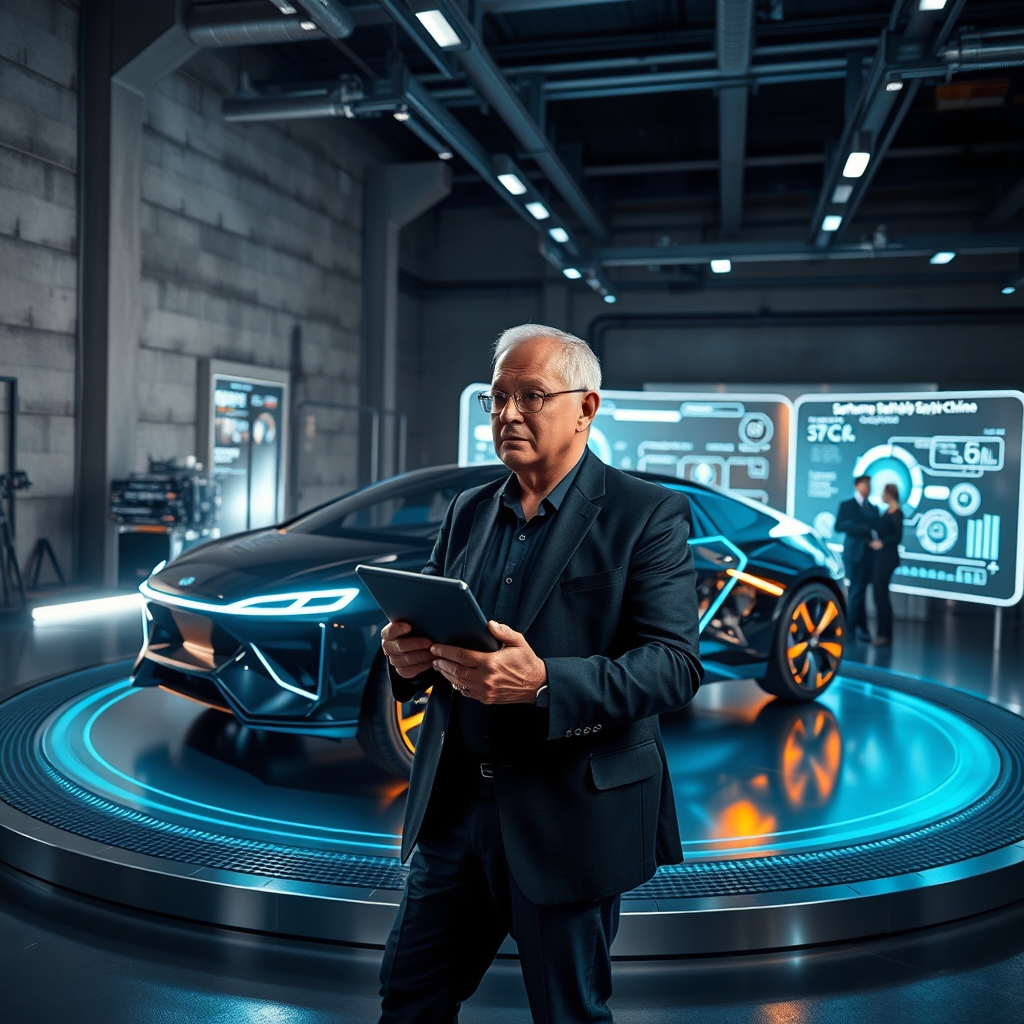
The Auto Mogul’s Playbook for 2026: How Industry Leaders Are Dominating the Next Era of Mobility
By 2026, the auto industry is no longer just about selling cars—it’s about redefining mobility, leveraging technology, and mastering ecosystems. If you’re aiming to become or stay an auto mogul, you need to understand the forces reshaping the sector: electrification, software-defined vehicles, regulatory shifts, and consumer behavior evolution. This guide reveals how top industry leaders are adapting, scaling, and leading in this new era, with actionable insights you can apply immediately to strengthen your position.
Key Takeaways
- Electrification is accelerating, but profitability hinges on battery innovation and supply chain control.
- Software-defined vehicles (SDVs) are the new differentiator—OEMs must transition from hardware to software-first business models.
- Regulatory pressures in emissions and safety are creating both risks and opportunities for early adopters.
- Consumer loyalty is shifting from brands to experiences—mobility-as-a-service (MaaS) and subscription models are gaining traction.
What Does It Take to Be an Auto Mogul in 2026?
Being an auto mogul in 2026 requires more than capital and ambition. It demands a deep understanding of three core pillars: technology, regulation, and consumer behavior. The most successful leaders are those who anticipate change, invest in R&D, and build agile organizations capable of pivoting quickly. For example, Tesla’s early bet on vertical integration—from battery production to software—has given it a significant edge in cost control and innovation speed, a model now being emulated by legacy automakers like Ford and GM.
However, scale alone isn’t enough. The real differentiator is how you leverage data and software to create recurring revenue streams. Companies like NVIDIA and Qualcomm are partnering with automakers to develop AI-driven vehicle platforms, enabling features like autonomous driving, over-the-air (OTA) updates, and predictive maintenance. This shift from one-time sales to continuous engagement is redefining what it means to dominate the industry.
How Are Top Auto Moguls Navigating Electrification?
Electrification is the most visible trend in the auto industry, but the path to profitability is complex. While EV adoption is growing—projected to reach 30% of global sales by 2026 (International Energy Agency)—many automakers are still struggling to break even. The key challenge? Battery costs, which account for up to 40% of an EV’s price. Auto moguls are tackling this by investing in battery technology, securing raw material supplies, and exploring alternative chemistries like solid-state batteries.
For instance, Volkswagen’s $2 billion investment in Northvolt and its partnership with QuantumScape for solid-state batteries highlight how industry leaders are future-proofing their supply chains. Meanwhile, BYD’s vertical integration—from lithium mining to battery production—has allowed it to undercut competitors on price while maintaining margins. The lesson? To lead in electrification, you must control the entire value chain, not just the final product.
Why Software-Defined Vehicles Are the New Battleground
The shift to software-defined vehicles (SDVs) is transforming automakers into tech companies. In 2026, the most valuable auto moguls won’t be those who build the best hardware, but those who deliver the best software experiences. This includes everything from infotainment systems to advanced driver-assistance systems (ADAS) and autonomous driving capabilities. Companies like Mercedes-Benz and BMW are already monetizing software through subscription services, such as heated seats or autonomous driving features, creating new revenue streams beyond the initial sale.
However, this transition isn’t without challenges. Legacy automakers must overhaul their development processes, adopting agile methodologies and cloud-based architectures to keep pace with tech giants like Apple and Google, which are entering the automotive space. The winners will be those who can balance innovation with reliability, ensuring their software is both cutting-edge and secure. For example, Tesla’s Full Self-Driving (FSD) beta program demonstrates how continuous software updates can enhance vehicle capabilities over time, turning cars into evolving platforms.
How Are Auto Moguls Leveraging Data to Drive Growth?
Data is the new oil in the auto industry, and the most successful auto moguls are those who harness it effectively. Connected vehicles generate vast amounts of data on driving behavior, vehicle performance, and usage patterns. This data can be used to improve product development, personalize customer experiences, and even create new business models. For example, Ford’s partnership with Google allows it to analyze vehicle data in real-time, enabling predictive maintenance and reducing downtime for fleet operators.
Moreover, data is critical for autonomous driving. Companies like Waymo and Cruise rely on petabytes of real-world driving data to train their AI models, ensuring their systems can handle complex scenarios. Auto moguls who invest in data infrastructure and partnerships with tech firms will gain a competitive edge in the race toward full autonomy. The key is not just collecting data, but turning it into actionable insights that drive revenue and customer loyalty.
What Role Do Regulations Play in Shaping the Future of Auto Moguls?
Regulations are a double-edged sword for auto moguls. On one hand, they create compliance costs and operational hurdles. On the other, they can serve as a catalyst for innovation and market differentiation. In 2026, emissions standards, safety regulations, and data privacy laws are among the most influential factors shaping the industry. For example, the European Union’s ban on new internal combustion engine (ICE) vehicles by 2035 has accelerated the shift to EVs, forcing automakers to rethink their product portfolios.
Auto moguls who proactively engage with regulators and align their strategies with upcoming policies can turn compliance into a competitive advantage. For instance, Stellantis’ commitment to carbon neutrality by 2038 positions it as a leader in sustainability, appealing to environmentally conscious consumers and investors. Similarly, companies that prioritize cybersecurity and data privacy will be better positioned to navigate regulations like the UN’s WP.29 framework, which governs vehicle cybersecurity.
How Can You Build a Scalable Mobility Ecosystem?
The future of mobility isn’t just about cars—it’s about ecosystems. The most successful auto moguls in 2026 will be those who build integrated platforms that combine vehicles, software, and services. Mobility-as-a-service (MaaS) is a prime example, where companies like Uber and Lyft are expanding beyond ride-hailing to offer subscriptions, micro-mobility, and even autonomous taxi services. Automakers are following suit, with GM’s BrightDrop and Ford’s BlueCruise leading the charge in commercial and consumer mobility solutions.
To build a scalable ecosystem, auto moguls must focus on interoperability, partnerships, and customer-centric design. For example, Toyota’s Kinto platform integrates car-sharing, leasing, and subscription services into a single app, providing a seamless experience for users. The goal is to create a sticky ecosystem where customers rely on your brand for all their mobility needs, from daily commutes to long-distance travel. This requires a shift from product-centric to customer-centric thinking, where the vehicle is just one part of a larger value proposition.
As the auto industry evolves, the role of the auto mogul is no longer confined to manufacturing and sales. It’s about vision, adaptability, and execution. The leaders of 2026 will be those who embrace software, data, and ecosystems while navigating the complexities of regulation and consumer expectations. Start by auditing your current capabilities, identifying gaps in your technology and supply chain, and exploring partnerships that can accelerate your growth. The next era of mobility is here—will you lead it or follow?