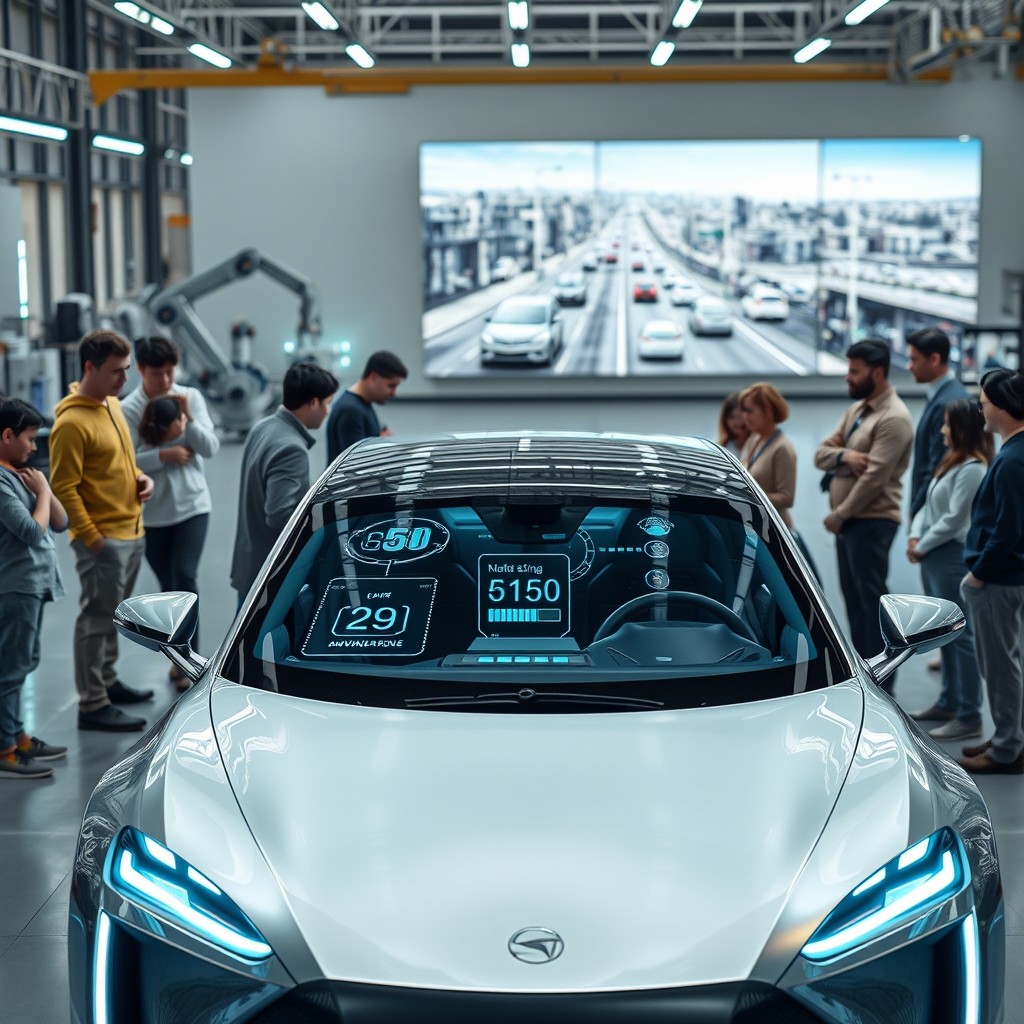
The Future of Automotive Technology in 2026: What Drivers and Industry Leaders Need to Know
By 2026, the automotive industry will undergo transformative changes driven by electrification, autonomous driving, and digital integration. In this article, you’ll learn how emerging trends like software-defined vehicles, advanced driver-assistance systems (ADAS), and sustainable manufacturing will reshape the way we drive, buy, and maintain cars. Whether you’re a consumer, fleet operator, or industry professional, understanding these shifts will help you make informed decisions in a rapidly evolving market.
Key Takeaways
- Software-defined vehicles will dominate, enabling over-the-air (OTA) updates and personalized driving experiences.
- Autonomous driving technology will advance, with Level 3 and Level 4 autonomy becoming more accessible.
- Sustainability will drive manufacturing, with circular economy practices reducing waste and carbon footprints.
- Connected car ecosystems will enhance safety, efficiency, and in-vehicle entertainment through 5G and AI.
How Will Software-Defined Vehicles Change the Automotive Experience?
Software-defined vehicles (SDVs) are redefining automotive design by shifting focus from hardware to software. By 2026, most new cars will rely on centralized computing architectures, allowing manufacturers to deploy OTA updates that improve performance, add features, and fix bugs—similar to how smartphones receive updates. This shift means vehicles will evolve over time, extending their lifespan and reducing the need for physical upgrades.
For consumers, SDVs offer unprecedented customization. Drivers can adjust everything from suspension settings to infotainment layouts via digital interfaces. Fleet operators will benefit from predictive maintenance, as AI-driven analytics monitor vehicle health in real time, minimizing downtime. However, this reliance on software also introduces cybersecurity risks, making robust digital protection a priority for automakers.
What Advances in Autonomous Driving Can We Expect by 2026?
Autonomous driving technology will make significant strides by 2026, with Level 3 (conditional automation) and Level 4 (high automation) systems becoming more widespread. These advancements will allow drivers to delegate control in specific scenarios, such as highway driving or low-speed urban environments. Companies like Waymo and Tesla are already testing these systems, and regulatory approvals are accelerating their adoption.
Safety remains a critical focus. The U.S. National Highway Traffic Safety Administration (NHTSA) reports that 94% of serious crashes are due to human error, and autonomous systems aim to reduce this statistic. However, challenges like edge-case scenarios (e.g., unpredictable weather or road conditions) and public trust will need to be addressed before full autonomy becomes mainstream.
How Is Sustainability Reshaping Automotive Manufacturing?
The push for sustainability is transforming how cars are built. By 2026, automakers will increasingly adopt circular economy principles, such as using recycled materials, designing for disassembly, and implementing closed-loop supply chains. For example, BMW’s iVision Circular concept demonstrates how vehicles can be constructed entirely from recycled or renewable materials, reducing waste and emissions.
Battery technology is also evolving. Solid-state batteries, expected to enter mass production by 2026, promise higher energy density, faster charging, and improved safety compared to lithium-ion batteries. These advancements will make electric vehicles (EVs) more practical, addressing range anxiety and charging infrastructure concerns. Governments are supporting this shift, with the European Union mandating that 55% of new cars sold by 2030 must be zero-emission.
What Role Will 5G and AI Play in Connected Car Ecosystems?
Connected car ecosystems will leverage 5G and AI to create smarter, safer, and more efficient driving experiences. By 2026, 5G networks will enable real-time vehicle-to-everything (V2X) communication, allowing cars to interact with traffic lights, road sensors, and other vehicles. This technology will reduce accidents, optimize traffic flow, and support autonomous driving by providing instant data exchange.
AI will enhance in-vehicle experiences through voice assistants, predictive navigation, and personalized recommendations. For example, AI-powered infotainment systems can learn driver preferences, suggesting routes based on traffic patterns or recommending nearby charging stations for EVs. Fleet operators will use AI-driven analytics to optimize routes, reduce fuel consumption, and improve logistics efficiency.
Real-World Examples of Automotive Innovation in 2026
Several automakers are already showcasing what’s possible. Mercedes-Benz’s DRIVE PILOT system, the first Level 3 autonomous driving system approved for use in the U.S., allows hands-free driving on approved highways. Meanwhile, Ford’s BlueCruise technology enables hands-free highway driving in over 130,000 miles of mapped roads in North America. These examples highlight how quickly autonomous features are becoming a reality.
On the sustainability front, companies like Rivian and Polestar are leading the charge with EVs designed for adventure and luxury, respectively. Rivian’s R1T pickup truck and R1S SUV feature modular battery packs, allowing for future upgrades as technology improves. Polestar’s focus on transparency—publishing lifecycle assessments for its vehicles—sets a new standard for sustainability in the industry.
As the automotive landscape evolves, staying informed about these trends will help you navigate the future of mobility. Whether you’re considering an EV, exploring autonomous features, or optimizing a fleet, the key is to embrace innovation while prioritizing safety, sustainability, and efficiency. Start by evaluating how these technologies align with your needs, and engage with industry resources to stay ahead of the curve.